
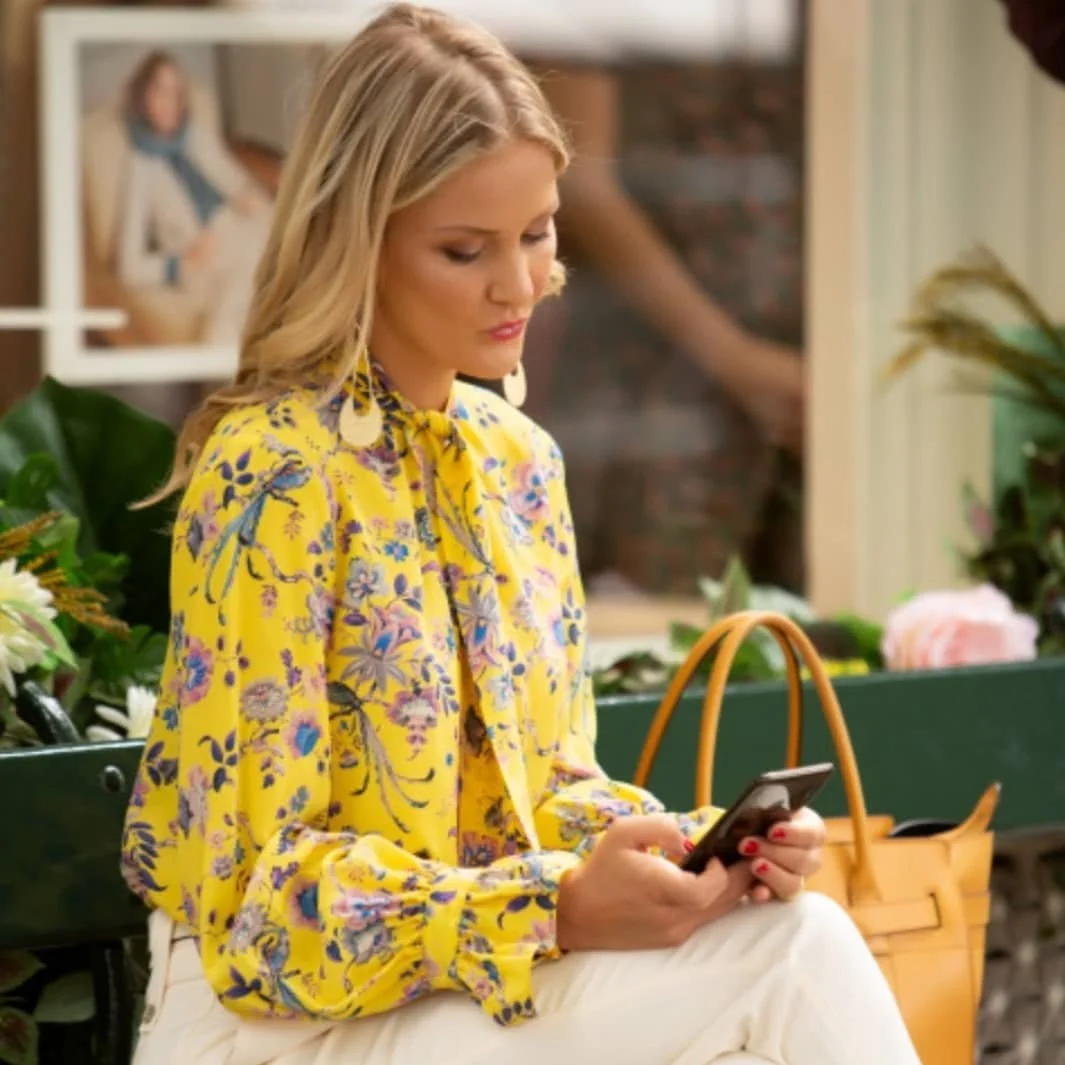
Most founders reach a point where they realise their wardrobe hasn't kept up with their position. The clothes still fit, technically. But the overall image — across a board meeting in one city, a keynote in another, and a dinner at The Moore Miami the same week — doesn't hold together. That gap is exactly what a personal stylist for CEOs is built to close.
A personal stylist for CEOs is a private wardrobe specialist who builds, edits, and manages the clothing system of a high-profile executive — remotely, in-person, or both. The engagement is strategic rather than transactional: it covers the full range of a founder's public appearances, from investor calls and board presentations to conference keynotes, media appearances, and private community events like EO or YPO forums. The result is a wardrobe that works as a coherent system, not a collection of individual purchases.
For founders and CEOs specifically, the wardrobe isn't a lifestyle preference — it's operational infrastructure. This post explains what virtual styling for executives actually involves, how it differs from in-person work, and why the founders I work with in Miami and across multiple cities choose a private stylist over every other option.
Why a Founder's Wardrobe Problem Is Different From Anyone Else's
Decision fatigue is the most commonly cited reason executives seek wardrobe help. And it's real — a CEO makes hundreds of consequential decisions before noon, and the mental overhead of choosing what to wear adds friction that compounds across a week. But decision fatigue is only part of the story.
The more specific problem is inconsistency under pressure. A founder's calendar shifts constantly. A day that was supposed to be internal turns into a press interview. A conference trip that was three days becomes five, with an unexpected dinner at a private members' club. The wardrobe that works for one context collapses under the demands of another — and founders who haven't built a deliberate clothing system feel it every time.
The second challenge is audience literacy. Founders move across communities that read clothing very differently. The technical founders who dominate a YPO chapter in Miami will interpret formality differently from an EO forum in New York or a Hampton collective gathering in Aspen. Getting it right across those environments isn't intuition — it's a wardrobe built with that range in mind from the start.
The third challenge is scale. Founders who split time between Miami, New York, and an international hub don't have one wardrobe — they have three. Managing what lives where, what travels well, what needs to be replaced, and what can serve double duty across climates requires a system. Without one, the same founder who runs a tight operation in every other area of their business is making wardrobe decisions the same disorganised way they did a decade ago.
What a Personal Stylist for Founders Actually Does
The word "stylist" carries associations that often don't match what a serious executive engagement looks like. It's worth being direct about what this work involves at the level I operate.
Wardrobe audit. The first step is understanding what you already own — what's working, what's sitting unworn, what's sending the wrong signal without you realising it. A remote audit works via a structured photo process; an in-person audit covers every section of the wardrobe physically. Either way, the output is a clear picture of gaps, redundancies, and what can be retained.
Style brief. Before any shopping happens, I build a brief specific to the client's role, calendar, and community. For a Miami-based founder who speaks at conferences quarterly, sits on a nonprofit board, and attends regular EO events, that brief looks very different from a brief for a founder who is primarily investor-facing and media-active. The brief is the reference document that governs every future purchase and styling decision.
Curated sourcing and shopping. I research and source pieces that fit the brief — this is not sending a client to browse a website. It's specific, edited selections pre-screened for fit, quality, brand positioning, and practical longevity. For remote clients, pieces are shipped directly; for Miami-based clients, I can accompany in-store. The edit is intentional rather than comprehensive.
Wardrobe management and system building. This is the element most clients value most over time. The wardrobe becomes a managed asset — tracked, refreshed seasonally, and adjusted as the client's role evolves. Rather than a one-time purchase, it's an ongoing system that relieves the client of wardrobe thinking entirely.
How Virtual Styling Works for Executives Across Multiple Cities
Virtual styling for founders is not video calls about fashion. Done properly, it's a complete service model that handles everything a traditional in-person engagement does, adapted for the reality of an executive who is rarely in one place long enough for repeated in-person sessions.
The process starts with a detailed intake: a private consultation call, photographs of the existing wardrobe, measurements, and a thorough brief covering the client's calendar, travel schedule, public commitments, and goals. That brief is built to be specific — not "professional but relaxed" as a vague instruction, but a documented understanding of exactly which contexts the wardrobe needs to perform in and what each of those contexts demands.
From there, curation and sourcing happen on my end. The client receives a curated edit — not a shopping list, but a styled selection with specific recommendations for each piece, how it integrates with existing wardrobe items, and which occasions it serves. For founders who travel between Miami, New York, and elsewhere, I maintain separate wardrobe systems for each location, managing what ships where and what remains in each city.
The common question from executives new to remote styling is whether it works as well as in-person. The honest answer: for experienced clients who have worked with a stylist before, remote works seamlessly. For new clients where fit is a central issue, I often recommend a hybrid start — an initial in-person or on-call session, followed by remote management. For Miami-based founders, the in-person option is always available. For clients based elsewhere, the initial remote process is thorough enough that fit issues are caught before anything is finalised.
| Format | Best For | What It Covers | Typical Cadence |
|---|---|---|---|
| In-Person (Miami) | New clients, full wardrobe audits, complex fit work | Full audit, in-store sourcing, wardrobe organisation | Twice per season + as needed |
| Virtual Only | Clients in other cities, travel-heavy schedules | Brief, curation, shipping, digital wardrobe tracking | Monthly refresh, seasonal planning |
| Hybrid | Multi-residence founders, Miami + other city | In-person for one base, virtual for others | Quarterly in-person, ongoing virtual management |
What Miami's Founder Communities Actually Demand From a Wardrobe
Miami in 2026 has a founder and executive community that is genuinely different from what it was five years ago. EO and YPO chapters here are active and high-calibre. Private membership communities — Hampton, Maison, The Moore Miami — have brought a cohort of serious founders, investors, and operators who live here part-time or have relocated entirely. The social and professional calendar these communities generate is specific in ways that generic style advice never accounts for.
The Grove founder moving between a waterfront board dinner, a Saturday EO forum, and a keynote at a Miami tech conference needs a wardrobe calibrated for that exact range — not the standard "smart casual for networking events" instruction most stylists default to. The cultural register in Miami's founder community runs toward a certain confident informality: quality is assumed, logo is avoided, and the ability to move between a morning meeting and an evening event at Vizcaya without returning home to change is considered basic competence.
What most stylists miss when working with Miami founders is the climate variable. Miami's heat and humidity are not a minor consideration — they actively determine which fabrics work and which don't, which tailoring constructions hold up and which collapse by afternoon, and which shoes are genuinely appropriate for a waterfront setting versus ones that look right in a photo and fail in practice. A personal stylist working in Coconut Grove and Miami who understands this builds a wardrobe for the actual environment, not for a theoretical one.
For founders with international obligations — investor dinners in New York, speaking slots in London or Singapore, Aspen gatherings in winter — the Miami wardrobe also needs to be a foundation that travels. The pieces I source for Miami-based clients are chosen with this dual-climate, multi-context reality as a primary criterion, not an afterthought.
Is a Personal Stylist Worth It for a Founder or CEO?
Yes — but with a specific caveat about who it's actually worth it for. A personal stylist for founders is not a luxury purchase in the decorative sense. It's a service that eliminates a category of operational friction for executives whose time is expensive enough that managing a wardrobe themselves is genuinely costly.
The founders and CEOs I work with share a few characteristics: their public calendar is active enough that image consistency matters; their role puts them in front of media, investors, or large audiences regularly; and they're managing enough complexity in their professional lives that the wardrobe has become something they think about more than they should. The service solves a real problem for those people.
It's worth being direct about who it's probably not right for. If your public calendar is light and your wardrobe demands are genuinely simple, the investment in a private stylist at this level is disproportionate. There are other services — subscription styling, one-time wardrobe edits — that serve a lower level of complexity well. What I offer is built for founders and executives whose lives have outgrown those options.
The question most executives ask is whether an executive image consultant differs from a personal stylist. The short answer: image consulting addresses communication and presence; personal styling manages the wardrobe that expresses it. At the level I work, the boundary between those two blurs significantly — the brief I build covers both the clothing and the context it has to perform in.
How I Work With Founders and CEOs at ElsaB Styling
My practice is built exclusively for UHNWI individuals, executives, and founders whose wardrobes need to function at a high level across a range of serious contexts. I keep the client list intentionally limited — this is not a volume service, and the quality of the engagement depends on knowing each client's situation in detail.
Every engagement starts with a private consultation call. No obligation, no pitch — the purpose is to understand whether the fit is right before either side commits. If the work makes sense, I move to a full wardrobe audit and style brief. From there, the engagement is ongoing: I manage the wardrobe seasonally, source pieces as the client's calendar and role evolve, and remain available for specific requests between cycles.
For founders who travel between Miami and other cities, the multi-location wardrobe management model is something I've built out deliberately. Each location has its own inventory, its own climate requirements, and its own social register — managing those as separate systems, coordinated by a single brief, is what prevents the wardrobe fragmentation that most multi-residence executives deal with.
All enquiries are confidential. Miami-based clients can access in-person sessions; clients in New York, Aspen, or internationally are served through the full remote model. The standard of work is the same regardless of format.
Frequently Asked Questions
What does a personal stylist for CEOs actually do differently from a regular styling service?
A personal stylist working specifically with CEOs and founders builds a wardrobe around the full context of an executive's public role — investor meetings, board presentations, media appearances, conference keynotes, and community events like EO or YPO forums. The work is strategic and ongoing rather than transactional. A regular styling service typically handles a single occasion or a one-time wardrobe edit; a private stylist at the executive level manages the wardrobe as a long-term asset, adjusting it as the client's role, calendar, and visibility evolve.
How does virtual styling work for a founder who travels constantly?
Virtual styling for founders starts with a detailed brief built around travel schedule, home bases, and the specific contexts each city demands. I manage separate wardrobe inventories for clients with multiple residences — Miami, New York, international — so the right pieces are in the right place. Sourcing, curation, and shipping are handled remotely; for new clients where fit is critical, I recommend a hybrid approach with an initial in-person session before transitioning to fully remote management.
How do I know if I need a personal stylist or a wardrobe consultant?
The distinction matters less than the problem you're trying to solve. If you're dealing with wardrobe inconsistency across different professional contexts, spending too much time thinking about what to wear, or noticing that your image hasn't kept pace with your position, you need both: wardrobe strategy and the execution to make it real. I work at the intersection of those two things. The difference between the roles is explained in more detail in my post on executive image consulting versus personal styling.
How much time does working with a personal stylist actually save a CEO?
The direct time saving — no longer researching, shopping, or deciding what to wear each day — is real but relatively modest in isolation. The more significant saving is cognitive: eliminating a category of daily decisions that, while individually small, collectively consume attention that belongs on more important things. Founders I work with consistently describe the change less as "I saved hours" and more as "I stopped thinking about this entirely," which is the actual goal.
Do you work with founders and CEOs outside Miami?
Yes. Miami is my home base, and I work in-person with clients throughout South Florida — Coconut Grove, Coral Gables, Brickell, Miami Beach, and Sunny Isles. For founders based in New York, Aspen, or internationally, I work through a full virtual model: a remote brief, curated sourcing, and ongoing wardrobe management handled without in-person sessions. For clients who split time between Miami and another city, I offer a hybrid engagement managing each location as a distinct wardrobe system under one unified brief.
What is the first step to working with ElsaB Styling?
The first step is a private consultation call — no obligation, no pitch. Its purpose is to understand your calendar, wardrobe situation, and goals, and to determine whether we're the right fit for each other. Submit an enquiry through the client form at elsabstyling.com and expect a response within 24 hours. All enquiries are confidential.
Work With a Personal Stylist Built for Founders and CEOs
The founders and CEOs who reach out to ElsaB Styling are typically past the point of trying to solve the wardrobe problem themselves. They've bought the right pieces individually, they understand quality, and they know their image matters — but the system hasn't come together. That's the gap private styling closes.
If your public calendar is active, your role puts you in front of investors, media, or large audiences, and your wardrobe has become something you think about more than you should — this is built for you. I work with a select number of clients in Miami and virtually across the United States and internationally. Enquiries are confidential and the first consultation is a private call with no obligation.