
What Women Executives Should Wear: A Miami Boardroom Styling Guide
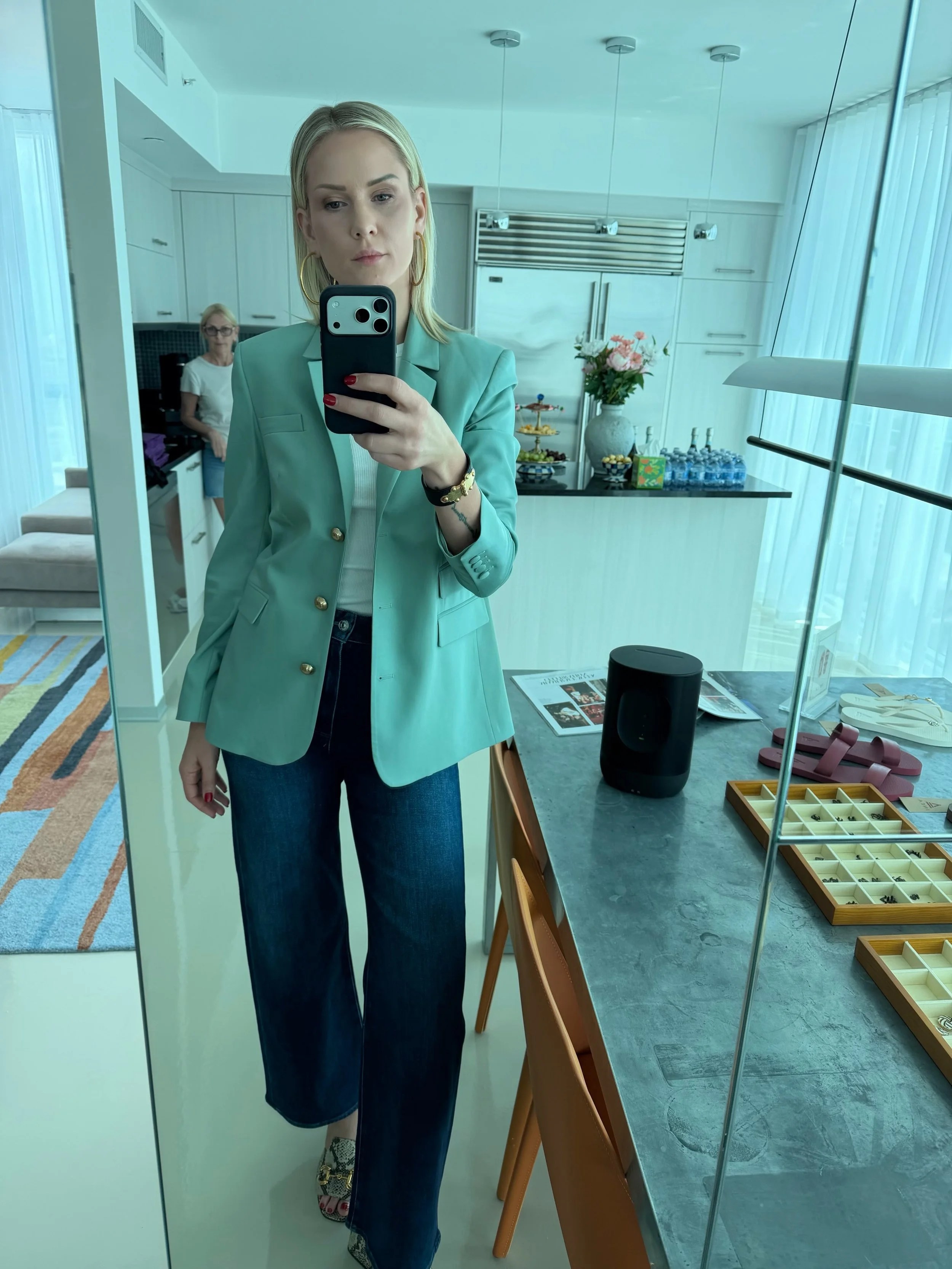
Miami rewards confidence. But a boardroom still runs on different rules than a rooftop dinner. For women executives building a career here, that gap causes real friction. Personal styling for women in leadership roles has to solve two problems at once. It needs to read as authoritative in a conference room. And it needs to survive a climate that punishes heavy tailoring. Most advice on this topic defaults to generic "power dressing" tips borrowed from colder cities. Or it swings the other way, into resort-casual suggestions that undercut authority in a high-stakes meeting. Neither fits Miami's actual working environment. It's humid outside and aggressively air-conditioned inside. Executives here move between a 9 a.m. investor call and a 6 p.m. gala without going home to change. This guide breaks down what actually works. It covers where the common advice goes wrong, and how to build a boardroom wardrobe that holds up across a demanding Miami schedule.
The Direct Answer
Women executives in Miami boardrooms should prioritize structured, tailored pieces in breathable natural fibers like tropical wool, crepe, or lightweight ponte, paired with a controlled color palette of navy, charcoal, and deep neutrals. The goal is a silhouette that reads as decisive rather than decorative. It transitions cleanly from air-conditioned offices into Miami's heat without wrinkling or overheating. This isn't about copying a male executive's suit-and-tie formula. Women's boardroom dressing carries its own authority signals. Getting them wrong in either direction, too soft or too severe, changes how a room responds before you've said a word. The details below cover exactly where that line sits, and how it shifts depending on the room you're walking into.
Why Miami's Boardroom Culture Is Genuinely Different
A women's executive wardrobe in Miami starts with an unusual problem to solve. The city carries the formality expectations of a major financial hub. But that formality sits on top of a climate and social culture more associated with resort dressing. That combination trips up executives who relocate from New York, Chicago, or overseas. It trips up longtime residents too.
The Climate Problem Nobody Solves Well
Outside, it's 90 degrees with humidity that ruins a silk blouse by 10 a.m. Inside a Brickell high-rise, the air conditioning runs cold enough to need a layer. Most wardrobe advice picks one condition and ignores the other. In practice, the fix is fabric choice, not fewer layers. Tropical wool and structured crepe hold their shape in heat. They don't wrinkle the way linen does, and they still read as substantial enough for a boardroom. A well-cut blazer in one of these fabrics solves the indoor-outdoor swing on its own, without the bulk of heavier wool suiting.
The Formality Ambiguity
Miami's business culture reads more relaxed than New York's on the surface. Executives in board meetings sometimes skip the suit entirely in favor of elevated separates. That relaxation is real, but it's easy to over-read. The common mistake is assuming "relaxed" means the same thing in every room. A quarterly board meeting with institutional investors calls for more formality than a Wednesday internal leadership sync, even at the same company. Our guide to Brickell boardroom dressing covers how this plays out for executives generally. The same read-the-room logic applies here.
Color and Fabric Choices That Actually Signal Authority
Authority signaling works differently for women than it does for men. Most generic styling advice glosses over that difference entirely.
Color: Control, Not Suppression
A navy, charcoal, or deep neutral base reads as decisive because it removes visual noise. It lets your points land instead of your outfit. This isn't about avoiding color altogether, though. A single considered accent, a blouse in a saturated jewel tone or a structured accessory, adds presence without competing with what you're saying. What doesn't work is either extreme. An all-black uniform can read as severe in a culture that values some warmth. A palette with too many competing colors or patterns reads as unfocused. In a boardroom, unfocused is the last impression you want.
Fabric: What Holds Up Under Miami Conditions
Fabric choice matters more here than in almost any other major US market. That's because the temperature swing between outside and inside is more extreme. Tropical wool suiting, structured crepe, and lightweight ponte knits are the workhorses. They resist wrinkling during a commute through Miami heat. They hold a tailored shape in cold conference rooms, and they photograph well for video calls, which now make up much of executive communication. Linen wrinkles too easily for a boardroom setting, despite being the default "hot climate" suggestion in most generic guides. It also reads as more casual than the room usually calls for.
Silhouette: The Line Between Authority and Rigidity
A structured shoulder and a defined waist read as intentional. Where women's dressing differs most from men's boardroom formulas is in how much rigidity is useful. A fully boxy, oversized silhouette can undercut the same authority it's meant to project. It reads as ill-fitted rather than powerful. The better target is tailored-but-not-stiff. Look for a blazer that moves with you, trousers or a skirt with a clean line, and enough structure to hold its shape through a full day.
Accessories: Less Is More
Accessories carry more weight in a boardroom than most people expect. One deliberate piece, a structured watch, a single strong earring style, or a well-made bag, reads as intentional. A stack of competing pieces reads as distracting, and it pulls focus away from what you're actually saying in the room. This matters even more on camera. Video calls compress detail, so busy jewelry or heavily patterned accessories often look cluttered on screen in a way they don't in person. A cleaner accessory approach photographs better and holds up across both formats.
Common Wardrobe Mistakes That Undercut Executive Presence
Some patterns show up consistently among women executives who feel their wardrobe isn't matching their level. This happens even when individual pieces are expensive and well-made.
| The Mistake | Why It Undercuts Authority | The Fix |
|---|---|---|
| Defaulting to linen for Miami's heat | Wrinkles within hours and reads as beach-casual, not boardroom-ready | Swap for tropical wool or structured crepe, which handle heat without losing shape |
| Over-layering for cold offices | Cardigans and shawls over a blouse can read as improvised rather than intentional | Invest in one well-cut blazer that functions as both the outdoor and indoor layer |
| Treating every meeting as equally formal | Overdressing for an internal sync or underdressing for an investor meeting both signal miscalibration | Build two or three formality tiers within one cohesive wardrobe, not one fixed uniform |
| Choosing trend pieces over foundational tailoring | Trend-driven pieces date quickly and rarely fit as precisely as tailored basics | Prioritize two or three perfectly fitted foundational pieces before adding trend elements |
The pattern underneath all four mistakes is the same. Wardrobe decisions get made item by item instead of as a system. A stylist working specifically with executive clients builds the system first, then fills it in. That's the structural difference between a closet full of good pieces and a wardrobe that actually works under pressure.
ElsaB Styling — Miami
Ready to stop building your wardrobe item by item and start working with a system?
Elsa works with women executives, founders, and board members across Miami to build wardrobes calibrated to their role, schedule, and the rooms they walk into.
Book a Private Consultation →Building a Boardroom Wardrobe That Travels Across Roles
Not every woman executive needs the same wardrobe, even within the same industry. What you're dressing for changes the calculation.
Founders and Entrepreneurs Pitching Capital
Investor-facing dressing needs to project stability and competence fast, often within a 20-minute pitch window, to people meeting you for the first time. A single tailored uniform, a blazer and trouser combination worn consistently, builds recognition. It also removes any first-impression risk. The same logic behind what executive image looks like at investor pitches and board votes applies here, even though the silhouette looks different.
C-Suite Executives in Internal Leadership Roles
Internal-facing roles allow more range, since the audience already knows your track record. The wardrobe can flex toward the formality tiers mentioned earlier. Save the most structured pieces for board-facing days, and ease into elevated separates for internal work.
Board Members and Advisory Roles
Board members often sit across multiple companies with different cultures in the same week. A capsule built around interchangeable, highly neutral pieces travels better here than a wardrobe built around one company's dress code. Our piece on building executive presence through wardrobe strategy goes deeper into how a leadership brand should evolve across different professional contexts. The honest trade-off here is time. Building a wardrobe genuinely calibrated to your role, schedule, and the rooms you sit in takes longer up front than buying a handful of "boardroom appropriate" pieces off a list. What it buys back is not having to think about it again for months. Getting this right in Miami isn't about picking one formula and repeating it forever. Personal styling for women in leadership roles works best as a system built around climate, role, and the specific rooms you walk into each week. Get that system right once, and the wardrobe stops being a daily decision. It starts working quietly in the background of an already demanding schedule.
Frequently Asked Questions
What should women executives avoid wearing in a Miami boardroom?
Avoid linen suiting. It wrinkles quickly in Miami's heat and reads as more casual than most boardrooms expect. Also avoid an all-or-nothing color approach, since both a fully monochrome black wardrobe and an overly patterned one can undercut a controlled, authoritative impression.
Is sleeveless clothing appropriate for a Miami business setting?
A well-tailored sleeveless sheath or blouse under a structured blazer works in most Miami boardrooms, especially given the climate. The blazer signals formality. The sleeveless base underneath solves for heat without reading as underdressed once the jacket is on.
How does boardroom dressing differ from business casual in Miami offices?
Boardroom dressing calls for structured tailoring, a controlled palette, and minimal accessories. Miami's everyday business casual allows more range in color, fabric, and silhouette. The distinction matters most on days with external stakeholders, investors, or board members in the room.
What fabrics work best for Miami's heat and cold offices?
Tropical wool, structured crepe, and lightweight ponte knits perform best. They resist wrinkling in outdoor heat, and they hold a tailored shape in heavily air-conditioned conference rooms, unlike linen or unstructured cotton.
Should dressing differ for investor meetings versus internal leadership meetings?
Yes. Investor and board-facing meetings benefit from a consistent, polished uniform that builds recognition quickly. Internal leadership meetings allow more range, since colleagues already know your track record and don't need a first-impression signal.
How often should an executive boardroom wardrobe be refreshed?
Most executive wardrobes benefit from a seasonal review rather than constant additions. Core tailored pieces are built to last several years. A stylist typically reassesses fit, wear, and any role changes twice a year, keeping the wardrobe current without unnecessary turnover.
About the Author: Elsa Boutaric is the Founder and Lead Stylist of ElsaB Styling, a Miami-based luxury wardrobe strategy firm serving executives, high-net-worth individuals, and board-level leaders across the United States. Her work has been featured in Elle, Marie Claire, OK! Magazine, LA Weekly, and The Independent.