
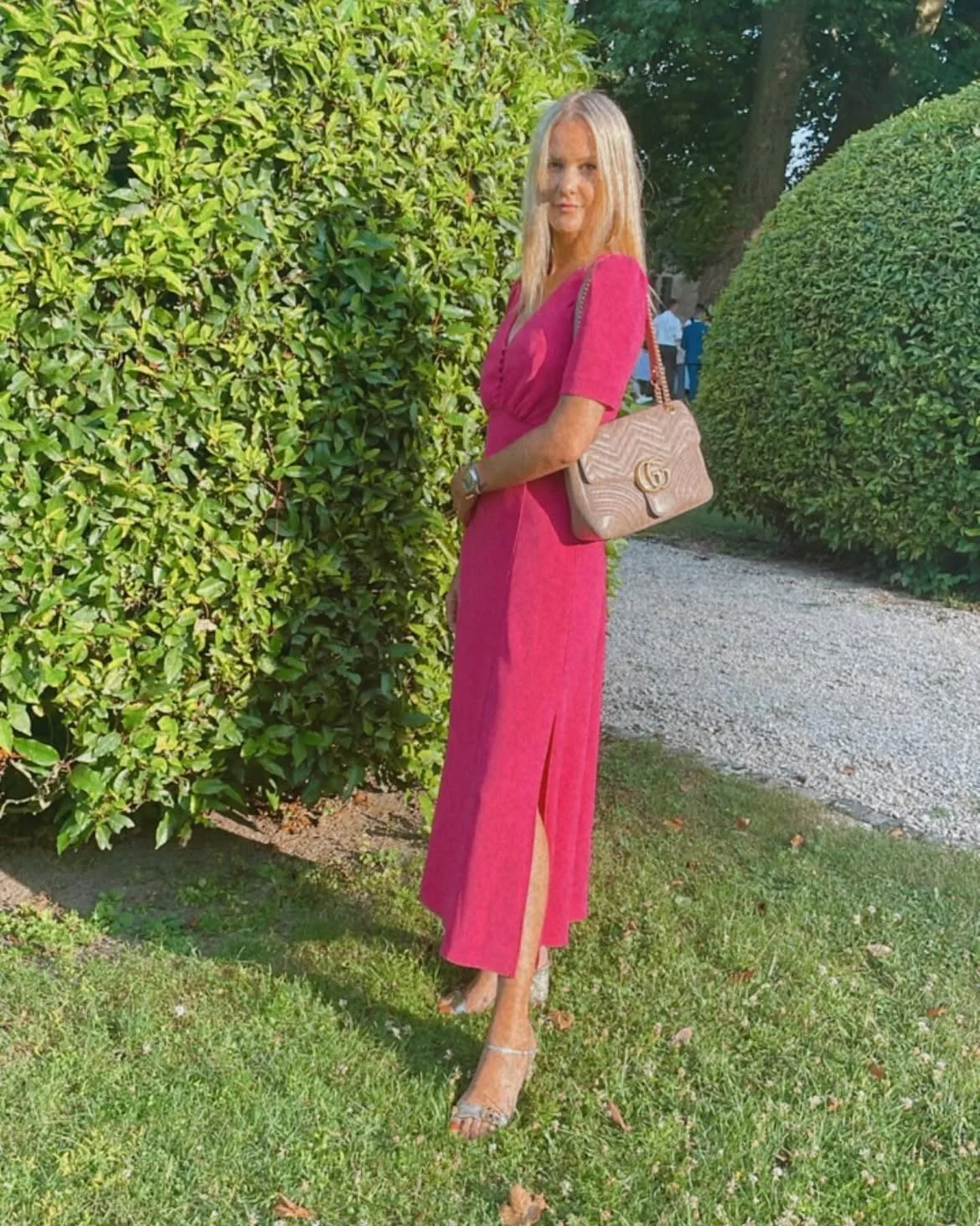
Miami weddings don't follow the same script as weddings anywhere else. The city's unique position — a formal social calendar running in parallel with a resort-adjacent culture, in heat that most traditional formalwear was never designed for — creates a wardrobe challenge that most wedding guest guides simply don't address. Getting the dress code right here means reading more than the invitation: it means reading the climate, the venue, the time of year, and the visibility the event carries.
This guide covers every Miami wedding dress code for both women and men — from black tie and tropical formal to beach formal, cocktail, and resort chic — with specific outfit guidance for each setting. Whether you're attending a Vizcaya garden ceremony, a Four Seasons Brickell ballroom reception, or an Art Deco Surfside venue event, what works in New York or London for the same dress code rarely works exactly the same here.
What Should I Wear to a Wedding in Miami?
For a Miami wedding, match the stated dress code first, then adapt for climate and venue. Miami's heat and humidity require breathable fabrics — lightweight linen, silk, structured crepe, or tropical wool — over heavy synthetics or thick formalwear. For daytime or beach ceremonies, elevated linen or resort tailoring is correct. For evening and ballroom events, standard cocktail or black tie applies, but lighter-weight versions perform better in Miami's conditions than traditional wool suiting or heavily structured gowns.
The dress code printed on the invitation is the starting point, not the full brief. Miami venues vary enormously — a private estate ceremony in Coconut Grove, a rooftop reception on Brickell Key, and a ballroom event at the Pérez Art Museum all carry the same "cocktail" label on the invitation but read very differently in person. Venue type, time of day, and the event's visibility are the three variables that decode what any Miami dress code actually means in practice.
Miami Wedding Dress Codes — What Each One Means
Miami wedding invitations use several dress codes that are either unique to the city or used differently here than in other formal markets. The table below breaks down the most common ones — what each means, what women should wear, and what men should wear.
| Dress Code | What It Means | Women | Men |
|---|---|---|---|
| Black Tie | Full formal — tuxedo for men, floor-length gown for women. Standard formality, Miami-adapted fabrics. | Floor-length gown or formal jumpsuit in silk, crepe, or structured jersey | Tuxedo or formal dinner jacket — linen-blend or tropical wool preferred over heavy wool |
| Black Tie Optional | Formal but tuxedo not required. Dark suits and cocktail-to-long dress range is correct. | Cocktail dress, midi gown, or formal jumpsuit in an elevated fabric | Dark suit in tropical weight, or dinner jacket — no jeans or casual blazers |
| Tropical Black Tie | Miami-specific. Full black tie formality but with lighter fabrics and room for more color. Linen dinner jackets are appropriate. | Floor-length gown or formal maxi — silk, crepe, or fine jersey; bolder color accepted | Linen-blend or tropical wool dinner jacket; white dinner jacket is widely seen and appropriate |
| Beach Formal | Elevated resortwear. Precision-tailored, polished — not casual beach attire. Common at Surfside, Key Biscayne, and waterfront estate weddings. | Flowing midi or maxi in silk, chiffon, or structured linen — polished silhouette, not flowing coverup | Tailored linen suit or linen trousers with a linen shirt and blazer; footwear appropriate for mixed terrain |
| Cocktail | Semi-formal. The most common Miami wedding dress code. Covers a wide range of venues from private clubs to rooftop events. | Midi dress, structured skirt and top, or tailored jumpsuit in an elevated fabric; knee to midi hemline | Suit in tropical weight or linen-blend; tie optional; no casual blazers or jeans |
| Resort Chic / Garden Elegant | Elevated casual — the least formal Miami dress code that still demands real thought. Common at private club lunches, daytime garden ceremonies. | Printed midi dress, linen separates, or flowy structured skirt in a warm-weather palette | Tailored chinos and a linen-blend or fine cotton blazer; a dress shirt without a tie; clean footwear |
What Does Black Tie Mean at a Miami Wedding?
Black tie at a Miami wedding means the same level of formality as traditional black tie anywhere — tuxedo for men, floor-length gown for women — but adapted for Miami's climate and culture. Miami's most sophisticated event hosts and guests opt for linen-blend or tropical wool dinner jackets over heavy wool tuxedos, and silk or crepe gowns over structured satin. The formality standard is identical; the fabric choice is smarter for the environment.
Miami black tie events also carry more latitude for color and personal expression than the more conservative black tie markets. A white dinner jacket on a man, or a bold jewel-tone gown on a woman, is not a violation of the dress code — it's widely embraced in a city where the event season and the visual culture have always intersected. For a comprehensive guide to reading and dressing for black tie across Miami's formal events — including gala season and private dinners — my complete black tie dress code guide covers the full range.
Miami Wedding Guest Attire for Women
For women, Miami wedding attire is built around two parallel decisions: silhouette and fabric. Getting both right means the outfit works across the indoor-outdoor moves that most Miami weddings involve — a waterfront ceremony followed by an air-conditioned ballroom reception, or a garden cocktail hour moving into a private club dinner. The fabrics and silhouettes that perform best in both settings are the ones worth investing in.
Best fabrics for women at Miami weddings
Silk and silk-blend fabrics — charmeuse, crepe de chine, silk georgette — hold their drape in humidity and breathe through warm outdoor settings without losing structure. Structured crepe in a heavier weight moves between daytime and evening without wilting. Fine cotton blends work for daytime and beach formal settings. What underperforms: heavy satin (traps heat and shows moisture), stiff brocade (loses its line in outdoor heat), and thick synthetic jersey (becomes uncomfortable within the first hour at an outdoor event).
Silhouette guidance by dress code
For black tie and tropical black tie: a floor-length gown or formal maxi in a fluid fabric is the correct register. A single bold color or a considered print photographs better against Miami's light and venue settings than a neutral — this is one of the few wedding markets where a jewel-tone or saturated print reads as a thoughtful choice rather than attention-seeking. For cocktail and black tie optional: a midi-length dress or structured jumpsuit in an elevated fabric covers the full range. For beach formal and resort chic: a flowing midi or maxi that reads as polished rather than casual — fluid through the skirt, with structure at the bodice or shoulder.
Footwear deserves specific thought for Miami weddings. Stiletto heels sink into sand, grass, and the grout lines of historic venues like Vizcaya. A low wedge, a block heel, or a strappy flat sandal in a metallic or neutral handles mixed terrain without sacrificing the formality of the overall look. I do a full wardrobe audit for clients ahead of Miami's wedding season specifically because footwear and accessory gaps are consistently where otherwise well-planned outfits fall apart.
Miami Wedding Guest Attire for Men
Men's wedding guest attire in Miami is an area where the gap between what most guests default to and what actually performs well in the environment is wide. The standard year-round suit in a medium or heavy weight wool — the default for most formal occasions — becomes genuinely uncomfortable within the first hour of a Miami outdoor event and shows wear under photography. The fix is simpler than most men expect: fabric and fit, not more formality.
What men should wear to a Miami wedding
For black tie and tropical black tie: a tuxedo or dinner jacket in a linen blend or tropical wool is the correct choice. A single-button, shawl lapel jacket in white or cream is widely seen at Miami's most formal wedding events and is considered appropriate — Miami's black tie culture has never been as rigidly defined by the dark-only convention as more conservative formal markets. A well-fitted dinner jacket in an ivory or white linen-blend is not an informal choice here; it reads as considered and climate-appropriate.
For black tie optional and cocktail: a suit in a tropical wool or linen-blend in a warm neutral — camel, warm navy, mid-gray — covers everything from a Coral Gables private club dinner to an evening rooftop reception. A tie is optional at cocktail-level events; a well-fitted blazer without a tie reads as appropriately semi-formal in most Miami settings. For beach formal and resort chic: a tailored linen suit or linen trousers with a linen shirt and unstructured blazer is the correct register. Shorts are not appropriate at a formally coded event regardless of the beach or outdoor setting.
Fabric and fit for men in Miami heat
Fit matters more in Miami than it does in colder-climate wedding settings, because heat exposes poor tailoring immediately. Strain across the shoulders, creasing at the seat, or a jacket that doesn't sit correctly on the chest is visible under event photography in a way that it simply isn't in colder, lower-light settings. The investment in proper tailoring — or in a suit that fits off the rack without alteration — pays off specifically in the event photography context. For executives and professionals who attend Miami's wedding and gala season regularly, understanding the difference between a personal stylist and an executive image consultant is useful context for planning that investment.
Fabric, Climate, and What Miami's Heat Actually Requires
Miami's wedding season runs year-round, with peak social concentration in December through April. December and January average lows around 65°F and highs in the mid-70s — the most comfortable months, but still warm by most formal dressing standards. February through April warms steadily toward the upper 70s and low 80s. The May-to-November period sees humidity regularly above 75% and temperatures in the high 80s, which is genuine heat for anyone in formal attire.
The fabrics that solve Miami's specific challenge are those that breathe outdoors and provide comfort in air-conditioned interiors without being too casual for formal settings. Lightweight tropical wool is the single most versatile option — it breathes when warm, insulates slightly when cool (critical for over-air-conditioned ballrooms), and holds a formal silhouette correctly. Structured crepe and silk-blend jerseys work for women across the full temperature range. Fine-gauge linen and linen blends are appropriate for beach formal and resort chic settings but slightly too casual for black tie events. For December and January wedding attire in particular, my Miami winter style guide covers the layering logic for the cooler months.
Color, Etiquette, and Image Considerations
The universal wedding-guest rule still applies: white, ivory, champagne, and near-white shades that could be mistaken for bridal white are off-limits for guests regardless of setting or formality level. This holds even at beach ceremonies where all-white looks might otherwise blend with the aesthetic.
Beyond that, Miami weddings are one of the most welcoming environments in the country for guests who want to wear color. Jewel tones — deep emerald, sapphire, burgundy, cobalt — photograph exceptionally well against Miami's natural light and venue backdrops and are widely embraced. Bold prints in a considered palette work at beach formal and resort chic settings. The key distinction is wearing color with intention — a well-chosen jewel tone in a precisely fitted garment reads as elevated; a busy print in a poorly fitted piece reads as underdressed regardless of the event's formality level.
For multicultural ceremonies, which are common across Miami's wedding calendar given the city's Latin American, Caribbean, and European cultural mix, confirming with the host family whether any color carries specific cultural significance is a simple, respectful step that avoids a preventable misstep.
Choosing an Outfit by Venue and Timing
Venue type and time of day often predict what a Miami dress code actually requires more reliably than the dress code label itself. A "cocktail" wedding at Vizcaya Museum and Gardens in the late afternoon operates differently from a "cocktail" evening event at a Brickell high-rise. Using venue context alongside the dress code gives a much clearer picture of the correct register.
| Venue / Setting | Dress Code Signal | Women | Men |
|---|---|---|---|
| Private estate or beachfront, daytime | Beach formal / resort formal | Flowing midi/maxi in silk or structured linen; wedge or block heel | Tailored linen suit or blazer with linen trousers; loafer or clean leather shoe |
| Botanical garden or private club, afternoon | Semi-formal / garden elegant | Midi dress or tailored jumpsuit in breathable fabric; low heel | Lightweight suit or blazer; tie optional; tropical wool or linen-blend |
| Rooftop or waterfront, evening | Cocktail to tropical black tie | Cocktail dress or midi gown in jewel tone or statement neutral; block heel or strappy flat | Linen-blend dinner jacket or dark tropical wool suit; dress shoe |
| Downtown hotel ballroom (Four Seasons, JW Marriott, Pérez Art Museum) | Black tie / formal | Floor-length gown or formal jumpsuit in silk or crepe; formal footwear | Tuxedo or dinner jacket in tropical wool or linen-blend; black dress shoe |
| Private yacht or waterfront club | Nautical resort formal | Tailored separates that move well and photograph cleanly; flat or low wedge | Tailored linen, discreet accessories, boat-appropriate footwear |
When to Work With a Miami Personal Stylist for a Wedding
Most Miami weddings can be navigated with the guidance above. A few situations consistently benefit from more direct, private input: multi-event wedding weekends spanning several dress codes, destination guests visiting Miami for the first time, executives or public figures managing an established personal image, and high-profile events where event photography or family visibility makes getting it right more consequential.
In those cases, working with a personal stylist in Miami for a private consultation well before the event — not same-day — prevents the kind of last-minute scramble that no amount of rapid sourcing fully resolves. If you're unfamiliar with how the process works, understanding what working with a personal stylist actually involves is worth a read before deciding whether it applies to your situation.
For executives attending Miami's wedding season across a full December-April calendar — which frequently spans five or six events across various dress codes — advance planning across the full season is more efficient and more cost-effective than sourcing each outfit separately under time pressure.
Frequently Asked Questions
What should I wear to a wedding in Miami?
Match the stated dress code, then adapt for Miami's climate and venue type. Prioritize breathable fabrics — lightweight linen, silk, structured crepe, or tropical wool — over heavy synthetics or traditional formalwear that wasn't designed for heat and humidity. Daytime and beach ceremonies call for elevated resort tailoring; evening and ballroom events follow standard cocktail or black tie conventions with lighter-weight fabric choices.
What does black tie mean at a Miami wedding?
Black tie at a Miami wedding means the same level of formality as black tie anywhere — tuxedo for men, floor-length gown for women — but adapted for Miami's climate. Linen-blend or tropical wool dinner jackets are appropriate and preferred over heavy wool. White dinner jackets are widely accepted. For women, silk or crepe gowns perform better than structured satin in Miami's heat. The formality standard is identical; the fabric approach is different.
What should men wear to a Miami wedding?
Men should wear a well-fitted suit or dinner jacket in a lightweight fabric — tropical wool, fine linen, or a linen-blend. For black tie events: a tuxedo or formal dinner jacket in linen-blend or tropical wool. For cocktail and beach formal events: a tailored linen suit or a blazer with tailored linen trousers covers most settings. Avoid heavy wool suits and bulky layers. Fit matters more in Miami than in colder-climate settings because heat exposes poor tailoring immediately.
What are the best Miami beach wedding guest dresses?
The best Miami beach wedding guest dresses are fluid midi or maxi silhouettes in silk, silk-blend, or fine crepe. These fabrics hold their shape in coastal humidity and read as formally intentional when the construction is precise. Avoid stiff ball gown silhouettes or heavy satin. Jewel tones and saturated prints photograph well against Miami's natural light. Footwear: a low wedge, block heel, or strappy sandal that handles mixed terrain without sacrificing the overall formality.
What colors should guests avoid wearing to a Miami wedding?
White, ivory, champagne, and any near-white shade are off-limits for guests regardless of the ceremony setting or formality level. Beyond that, Miami weddings welcome color — jewel tones, bold prints, and saturated hues are embraced rather than seen as inappropriate. For multicultural ceremonies, confirming with the host family whether any specific color carries cultural significance is a worthwhile step.
What is "tropical black tie" or "beach formal" on a Miami wedding invitation?
Tropical black tie means full black tie formality — floor-length gowns, dinner jackets — but with lighter-weight fabrics and more latitude for color. Linen-blend and tropical wool dinner jackets are appropriate. Beach formal means elevated resort tailoring: precision-fitted linen for men, flowing midi or maxi silhouettes in structured fabric for women, and footwear appropriate for mixed terrain. Both are common Miami dress codes that reflect the city's unique position between resort culture and a formal social calendar.
Every Miami wedding carries its own combination of venue, dress code, climate, and visibility to navigate. The guide above covers the full range — but for private, discreet guidance on a specific event, coordinating looks across a family or household, or preparing for a full season of Miami's wedding and gala calendar, I work with clients in person and virtually.