
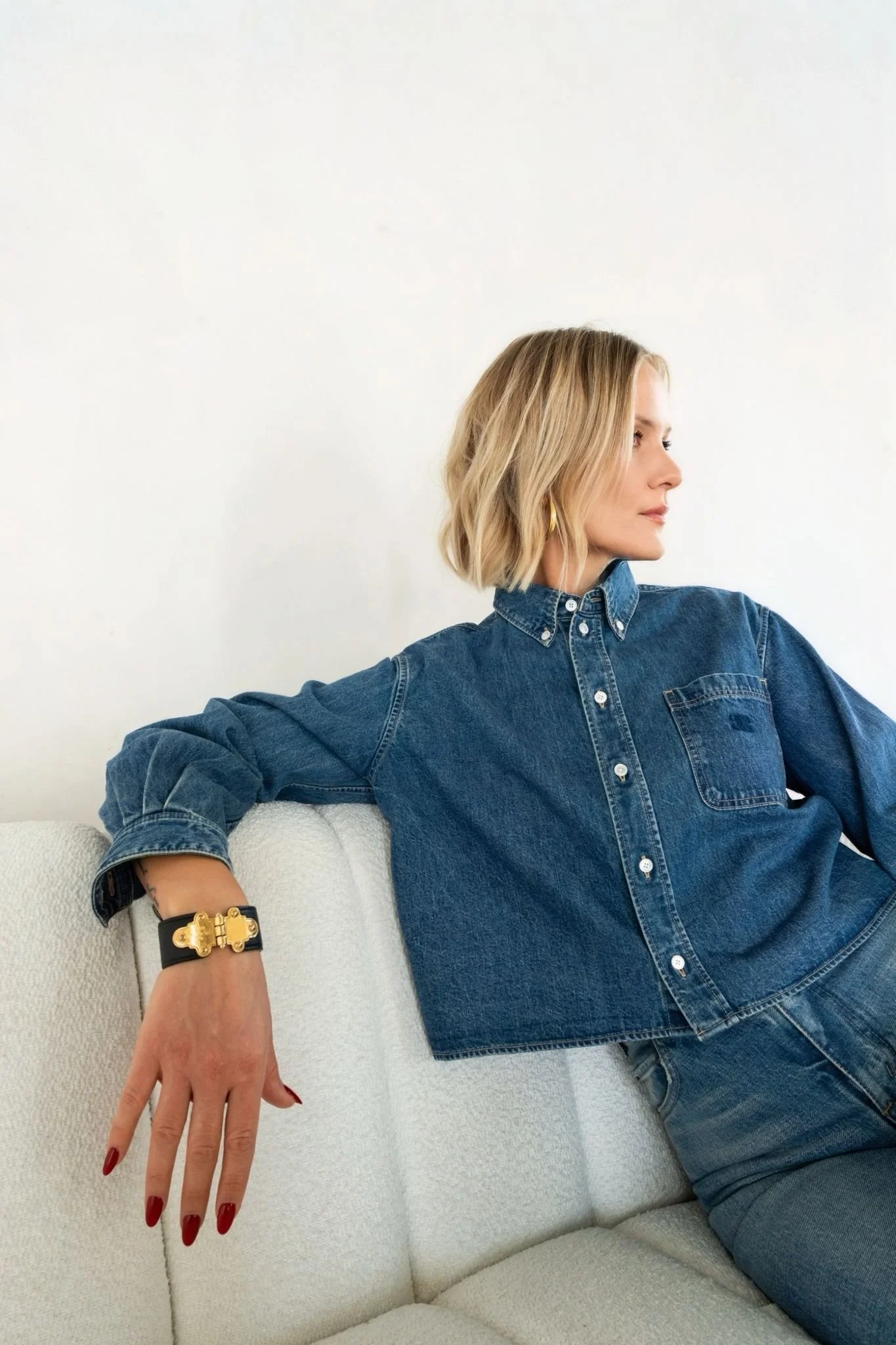
A luxury travel wardrobe is not assembled by packing expensive items into premium luggage. It is built around a precise understanding of what each trip demands — the climates involved, the formality levels required, the social contexts across multiple destinations, and the practical reality of moving between all of them without returning home to change. I am Elsa Boutaric, Parisian-born personal stylist and founder of ElsaB Styling in Miami. My work with HNWI executives and private clients on travel wardrobe curation comes down to the same principle every time: the right ten pieces, chosen precisely, do more than forty pieces chosen without a system.
These are the ten wardrobe essentials that consistently appear in the travel wardrobes I build for clients traveling between Miami, Aspen, New York, London, and internationally — and why each one earns its place.
1. Tailored Blazer — The Most Versatile Piece in a Luxury Travel Wardrobe
A well-tailored blazer is the single piece in a travel wardrobe that moves across more contexts than any other. It elevates a simple shirt and trouser combination to business-meeting standard. It adds structure to a cashmere knit for an elevated casual dinner. It covers the transition from a cooled aircraft cabin to a warm destination without requiring a coat. For executives traveling across multiple contexts in a single day — and most of my clients are — the blazer is the piece that makes the day's outfit changes possible through addition and subtraction rather than wholesale replacement.
The critical variable is fabric. For Miami-based clients traveling across climates, lightweight tropical wool performs best: it resists wrinkling during transit, holds its structure in air conditioning, and does not overheat in warmer destinations. A blazer in navy, charcoal, or a warm neutral covers business formal and elevated casual simultaneously, which is the practical standard for a travel piece.
2. Luxury Luggage — The Logistics Layer of a Travel Wardrobe
Luxury luggage matters not as a status signal but as a functional requirement for protecting investment-grade pieces in transit. Garment bags from quality luggage houses — Louis Vuitton, Rimowa, Tumi — are built with compartmentalization that keeps structured pieces from compressing against each other, which is where most travel wardrobe damage occurs. A suit that arrives from a garment bag still structured is ready to wear immediately. One that has been folded into a standard suitcase against other compressed items typically needs pressing before it can be worn — which adds a logistics step that defeats the purpose of a streamlined travel wardrobe.
For clients managing wardrobes across multiple residences, luggage selection also involves understanding which pieces travel between locations and which remain fixed at each residence — minimizing what actually moves while maintaining the appearance of a complete, ready wardrobe at every destination.
3. Cashmere Sweater — The Layering Anchor
Fine cashmere is the most climate-versatile fabric available for luxury travel. It performs as a light layer against aircraft air conditioning, provides genuine warmth in colder destinations, and reads as elevated casual in resort and informal social contexts. A cashmere sweater in a neutral — grey, camel, navy, or ivory — is a piece that genuinely works across every stop on a multi-destination itinerary without requiring any decision about context-appropriateness.
The practical consideration for travel cashmere is weight and knit construction. A lighter-weight cashmere in a fine knit packs more compactly, releases wrinkles more readily when unpacked, and handles the temperature range of mixed-climate travel better than a heavier gauge. For Miami-based clients traveling to colder destinations, a mid-weight cashmere covers the range from a chilly gallery event to a casual dinner in a single piece.
4. Designer Sunglasses — Precision Over Occasion
Designer sunglasses serve two functions simultaneously in a travel wardrobe: UV protection and visual authority in outdoor and transitional contexts. In Miami's specific environment — high UV exposure, frequent indoor-outdoor movement — sunglasses are worn more consistently and more visibly than in most markets, which makes the quality and appropriateness of the choice more consequential.
The consideration for travel is the same as for any other accessory: one well-chosen pair that works across the trip's contexts covers more than multiple pairs that each serve a narrower function. Classic silhouettes from Tom Ford, Oliver Peoples, or Persol in a neutral lens tone read correctly from a yacht deck to a gallery opening to a business arrival — which is the range most HNWI travel wardrobes actually need.
5. Tailored Trousers — The Foundation of Day-to-Evening Transition
The tailored trouser earns its place in a travel wardrobe because it is the piece most capable of holding different outfit registers together as the day changes around it. A neutral tailored trouser — in tropical wool, structured crepe, or a wool-cotton blend — works with a dress shirt and blazer at a morning meeting, with a cashmere knit at lunch, and with an evening shirt and jacket at dinner. The trouser does not change. What surrounds it does. This is the practical logic of travel wardrobe efficiency: anchor pieces that hold across contexts while more specific pieces are added or removed.
The key variable for travel is fabrication. Trousers that wrinkle easily undermine the transition logic entirely — if the piece requires pressing at each stop, it creates logistics rather than removing them. Tropical wool and structured crepe both hold their line through transit and recover readily from packing, which is why they appear consistently in the executive wardrobes I build for heavy travelers.
6. Signature Timepiece — A Statement That Travels Without Packing
A significant timepiece is the one statement piece in a travel wardrobe that requires no packing space, adds no weight, and works across every context from business meetings to private dinners. It is also the piece that is most continuously visible — worn through every meeting, every arrival, every social event — which means its selection carries more cumulative weight than any single outfit choice.
For HNWI clients who travel with security considerations, a significant watch worn regularly is also part of the wardrobe's overall approach to visible luxury — one considered piece that signals the client's position without requiring conspicuous additional accessories. A classic Patek Philippe or AP Royal Oak wears the same way at a board meeting, a yacht deck, and a gala, which is the versatility standard a travel wardrobe piece needs to meet.
7. The White Shirt — The Most Functional Piece in a Travel Wardrobe
The white shirt does more work in a travel wardrobe than almost any other piece because it is the universal ground layer — the piece that makes a blazer, a suit jacket, or a statement accessory read correctly in any context. A crisp, well-fitted white shirt beneath a blazer covers business formal. The same shirt untucked with tailored trousers covers elevated casual. Beneath a dinner jacket, it covers black tie.
For travel specifically, two white shirts — one in a fine cotton that holds a crisp line for professional contexts, one in a linen-cotton blend for warmer destinations and resort settings — covers the full range without requiring a third piece. The weight of high-quality shirts also means they pack flat and travel without significant creasing, which makes them among the most efficient pieces in a travel bag by return-on-packing-space measure.
8. Luxury Leather Shoes — Chosen for Range, Not Occasion
The single most common error in travel footwear packing is selecting shoes for specific occasions rather than for coverage range. A shoe that works for one formal dinner but nothing else occupies space that a more versatile piece would use more effectively. The standard for a travel shoe at the luxury level is: it needs to work across at least two formality contexts and travel without deforming in a bag.
For male HNWI travelers, a well-constructed Oxford in black or dark brown leather covers formal through business formal, while a suede loafer covers elevated casual through smart casual — these two choices handle most travel itineraries without additional footwear. For female clients, a mid-heel in a neutral leather or pointed-toe flat in a quality material covers a similar range. Anything beyond these two pieces should earn its packing space with a specific context that the base pair cannot cover. My approach to travel wardrobe planning always starts from footwear because the shoes set the formality ceiling for every outfit they appear in.
9. Silk Scarf — The Most Efficient Accessory in a Travel Wardrobe
A silk scarf earns its place in a travel wardrobe on a strict efficiency calculation: it packs flat, adds no meaningful weight, and does more visible styling work per inch of packing space than almost any other accessory. Worn at the neck over a white shirt, it shifts the outfit register without changing any other piece. Tied as a belt, it adds color and texture to a neutral ensemble. Used as a hair accessory or handbag detail, it creates visual interest at the level of a statement piece without requiring a separate statement item.
For my clients who travel between Miami and European destinations — where the visual codes shift meaningfully between the two — a silk scarf in a considered color palette bridges the sartorial register difference without requiring additional pieces. One Hermès or Loro Piana scarf in a color that references both the travel wardrobe's neutral base and its one or two statement shades covers far more combinations than its size suggests.
10. Chic Outerwear — The Context-Setting Layer
Outerwear is the first piece seen on arrival and the last piece worn on departure — which means it sets the initial and final impression in every travel context. For HNWI clients who arrive at airports, hotels, and private residences where the quality of dress is immediately registered, the outerwear choice carries more visual weight than any other single piece.
For Miami-based travelers, the outerwear calculation is also the most climate-variable: a client traveling from Miami to London in November needs a coat that functions in genuine cold while remaining appropriate for the business and social environments at the destination. A well-constructed cashmere or wool coat in a neutral from a quality house — Max Mara, Loro Piana, Brioni — handles this range and also packs without losing its line when layered correctly in luggage. For warmer destinations, a trench coat in water-resistant cotton serves as both a light layer and a polished arrival piece that works year-round.
How a Personal Wardrobe Stylist Builds a Travel Wardrobe
Building a luxury travel wardrobe that actually functions begins with a wardrobe audit — an assessment of what already exists, what condition it is in, and what the upcoming travel schedule actually requires. Most clients find this process reveals two things: they own more than they need for most trips, and they have specific gaps that become visible only when the trip's contexts are mapped explicitly.
The audit leads to a trip brief — a precise map of what the itinerary requires across every context — and the travel capsule is built against that brief rather than assembled reactively before departure. For clients whose schedules include recurring travel to the same destinations, the brief becomes a template that updates seasonally rather than being rebuilt from scratch for each trip. The result is a travel wardrobe that is always ready rather than always being assembled under time pressure.
Frequently Asked Questions
How many pieces does a luxury travel wardrobe actually need?
For most HNWI travelers on multi-destination trips of five to ten days, a travel wardrobe of twelve to sixteen pieces — including shoes and outerwear — covers the full range of professional and social contexts without over-packing. The number matters less than the selection logic: each piece needs to serve at least two contexts, and the collection as a whole needs to cover every context the itinerary includes. Most clients find that a precisely assembled travel wardrobe is significantly smaller than what they typically pack, and significantly more functional.
Which fabrics travel best for luxury travelers?
Tropical wool, structured crepe, fine merino, and silk-blend jerseys consistently perform best across the demands of luxury travel — they resist wrinkling during transit, hold their structure through the temperature shifts between aircraft, hotel, and event environments, and recover readily when unpacked. Linen wrinkles too readily for professional contexts. Heavy wool and unstructured cotton both present climate limitations. The fabric selection for a travel wardrobe is a technical decision, not purely an aesthetic one, and it determines how functional the wardrobe actually is when the bag is opened at the destination.
How does a personal wardrobe stylist help with travel packing?
A personal wardrobe stylist approaches travel packing as a logistics function rather than a packing exercise. The process starts from the trip's context map — what specific occasions require what specific visual registers — and works backward to identify exactly which pieces from the existing wardrobe cover those requirements. Gaps are identified and sourced before departure. The travel capsule is assembled with complete looks documented rather than individual pieces listed. The client arrives at each destination with a pre-solved wardrobe rather than a bag of pieces that need to be assembled under time pressure at the hotel.
Can the same luxury travel wardrobe work for Miami and a colder destination?
Yes, with careful fabric selection and layering strategy. The core pieces — blazer, tailored trouser, white shirt, leather shoes — work across climates when chosen in fabrics that perform in both. Layering pieces, primarily the cashmere sweater and outerwear, are what adjust the wardrobe's warmth range without requiring separate collections for each destination. For clients traveling between Miami and colder European or mountain destinations, the travel wardrobe typically stays the same; the layering combination around the core pieces is what changes. This is the practical advantage of a wardrobe built as a system rather than as separate trip-by-trip collections.
How does a personal shopper help with luxury travel wardrobe sourcing?
A personal shopper working on travel wardrobe sourcing pre-selects pieces against the trip brief before the client sees them — in the correct sizes, confirmed as available, and already assessed for compatibility with the pieces the client already owns. The client reviews a curated edit rather than browsing available stock. For travel-specific needs, such as a piece for a specific event at the destination or a gap in the footwear coverage, the personal shopper handles sourcing and delivery so the piece is ready before departure rather than acquired in transit.